
Learn about Regional Transportation District including our Sustainability, News & Press Releases, Projects, and Team.
Talk to us
Have questions? Reach out to us directly.
Learn about Regional Transportation District including our Sustainability, News & Press Releases, Projects, and Team.
About Regional Transportation District
- Created in
- 1969
- Square miles in service area
- 2,342 square miles
- Debt Outstanding
- $2.769 billion
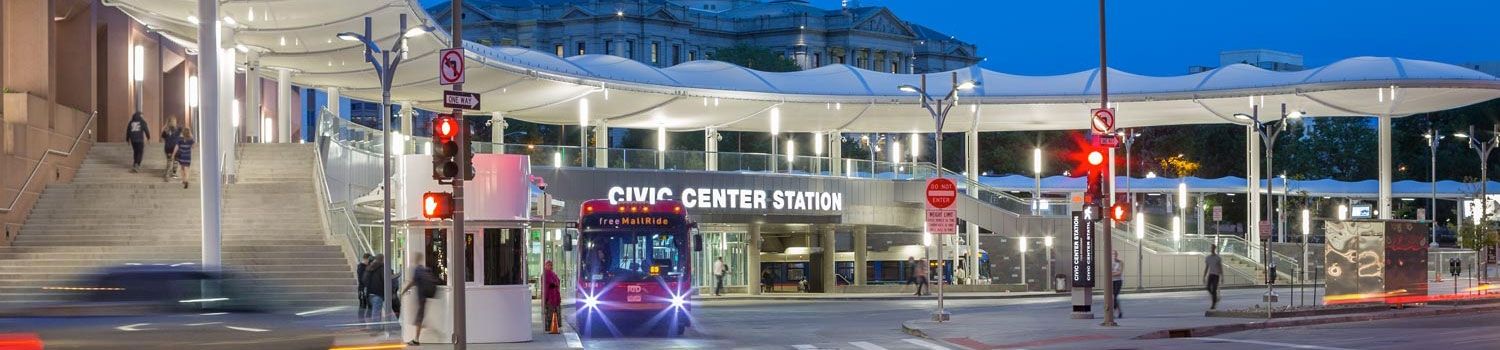
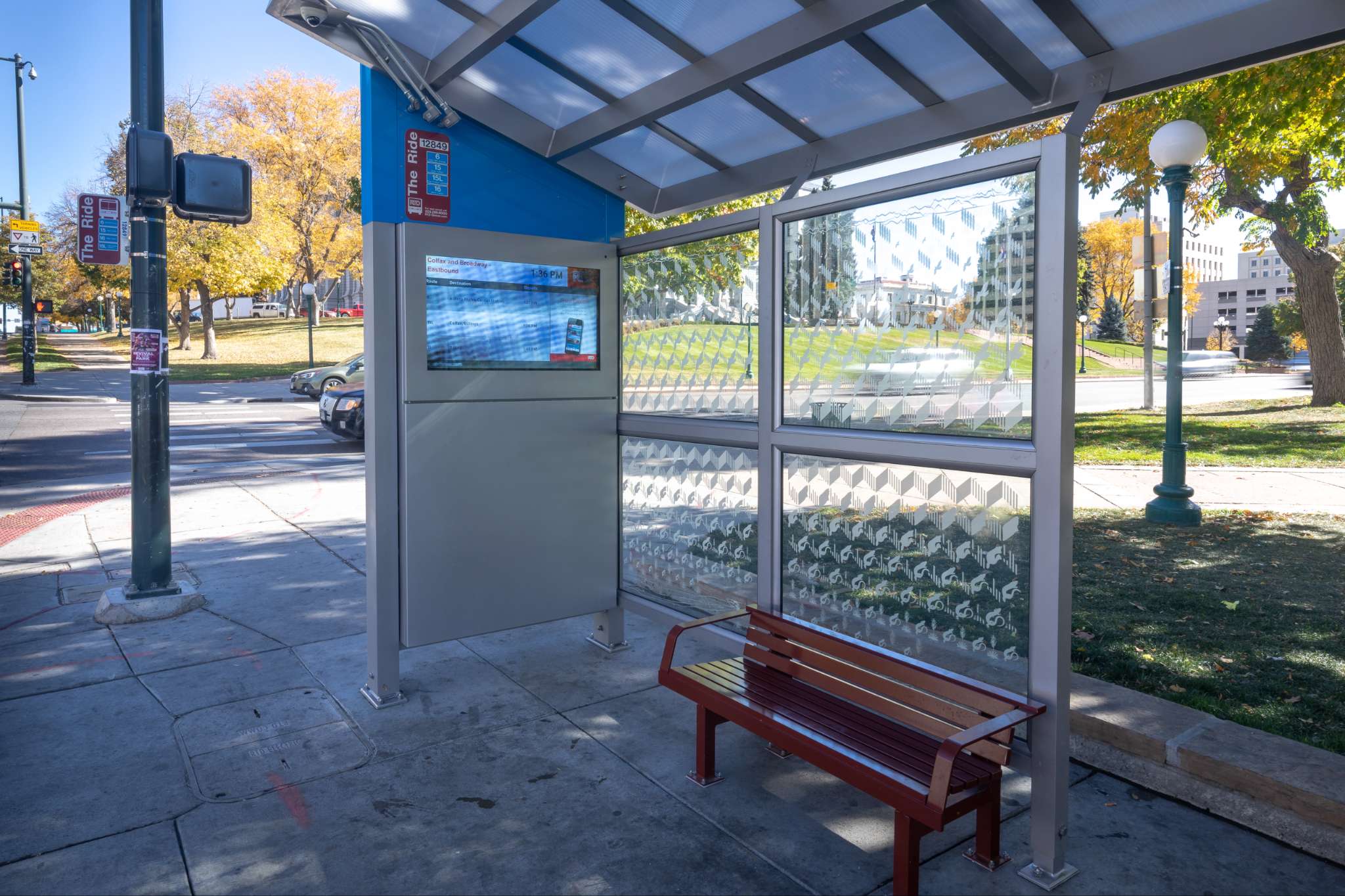
The Regional Transportation District provides public transportation in eight counties including all of Boulder, Broomfield, Denver and Jefferson counties, parts of Adams, Arapahoe and Douglas Counties, and a small portion of Weld County. As a public agency, we are dedicated to serving the public and providing for the transportation needs of over 3.08 million people located within 2,342 square miles. Our services include bus, rail, shuttles, ADA paratransit services, demand responsive services like FlexRide, special event services, vanpools, and many more.
We are an organization made up of dedicated and qualified people doing extraordinary things to make the metro area the best in the West. We take great pride in the delivery of a wide array of services and we’re proud to be part of the productivity, progress, and passion of 40 municipalities. Our wheels will never stop rolling as we transform the region through transportation.
Bus
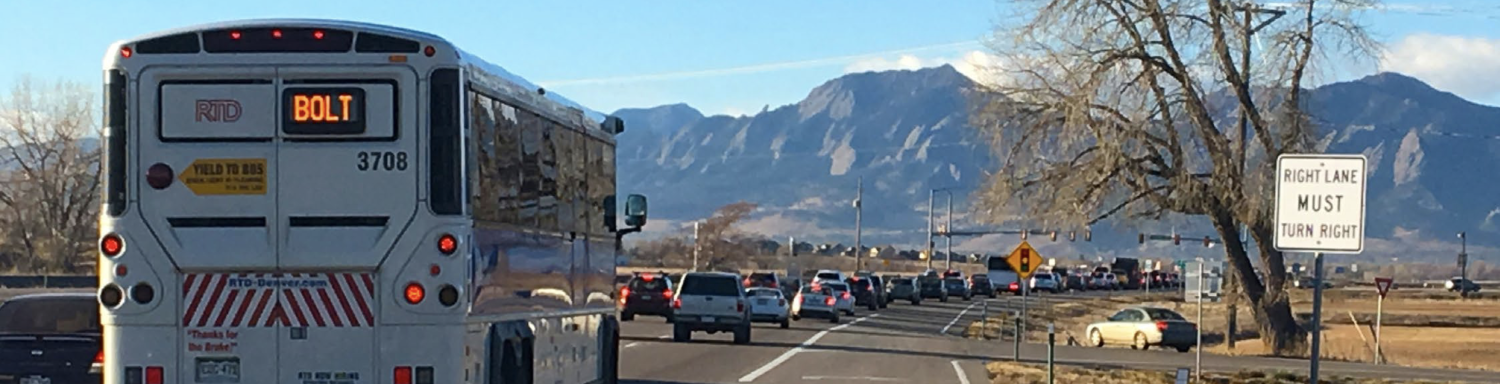
The Regional Transportation District was created in 1969 by the 47th session of the Colorado General Assembly. Efforts in these early years focused on regional transportation planning.
In 1973 voters approved a 0.5% sales tax initiative to finance a $1.56 billion multi-modal transit system. At this time, RTD acquired privately owned bus companies, improved service frequencies, and expanded routes in numerous counties throughout the metro area. By 1976, ridership grew to 35.2 million rides annually.
Rail
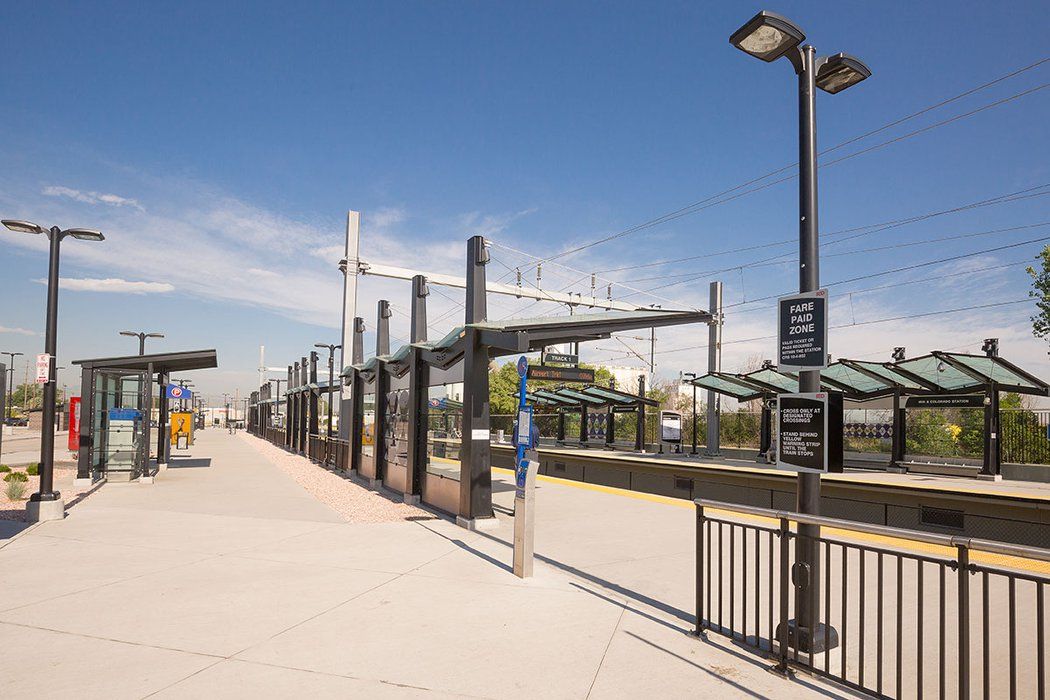
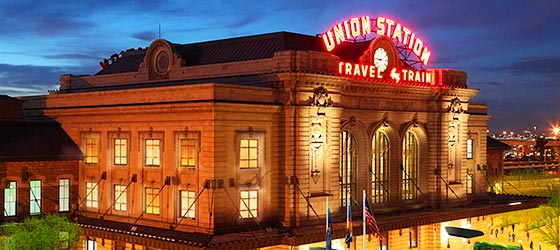
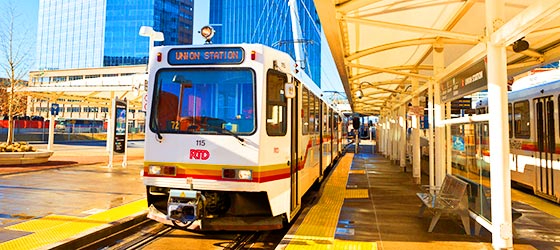
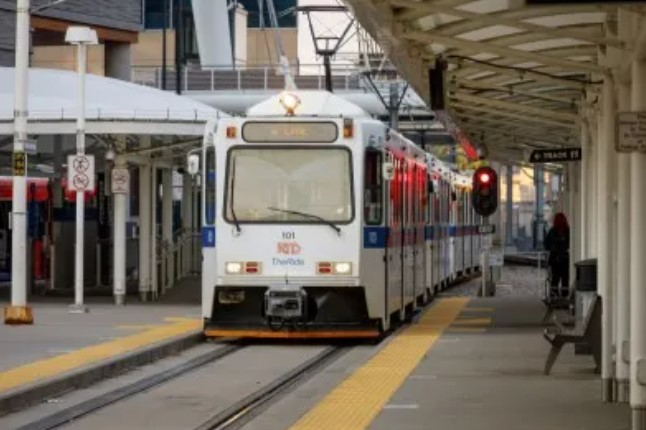
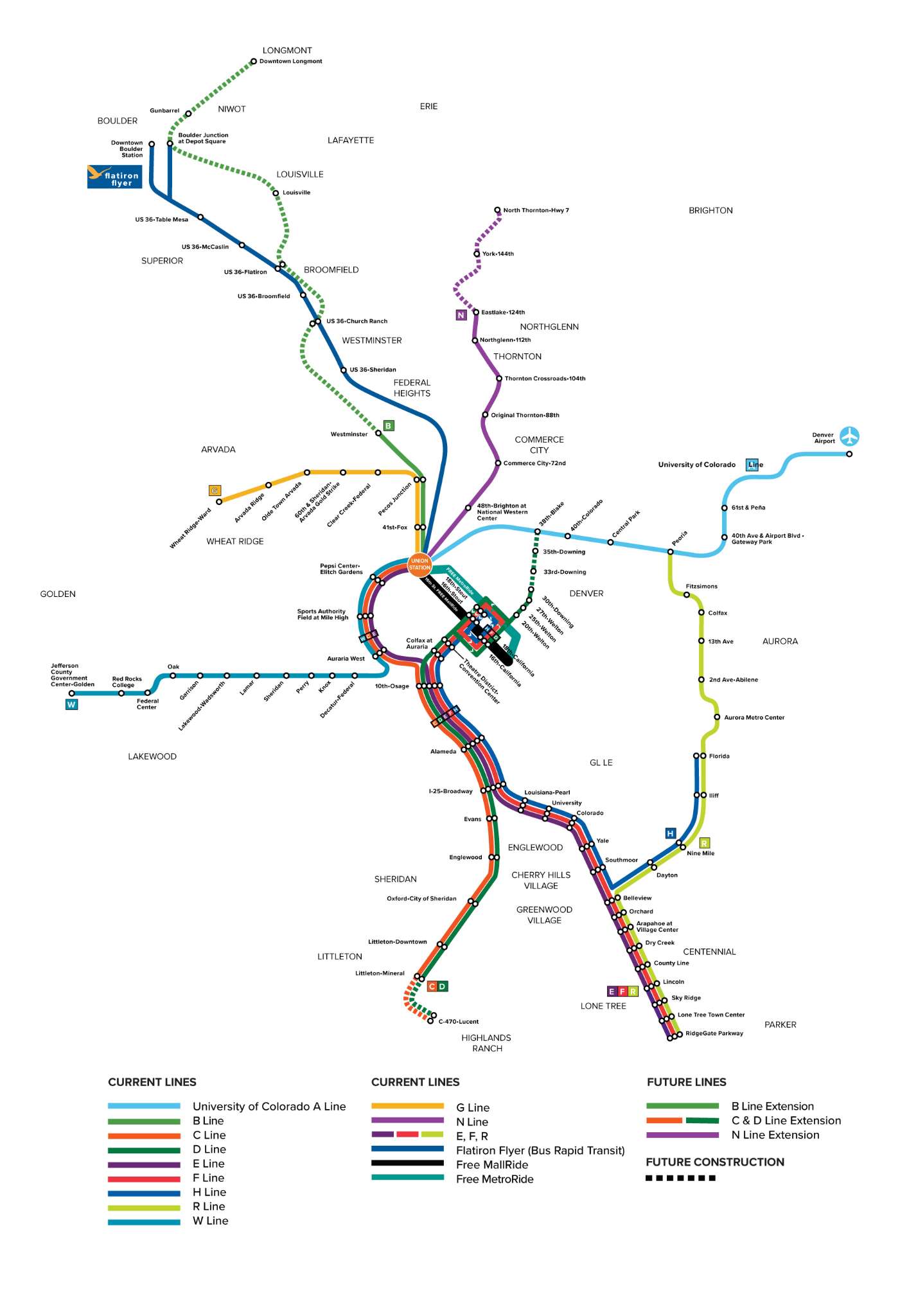
RTD celebrated its first light rail opening October 7, 1994. The 5.3-mile D Line attracted hundreds of thousands of riders when it began operations with just eleven light rail vehicles. April 22, 2016 marked another monumental milestone in Denver transit history with the opening of the metro area’s first high-speed commuter rail line - the A Line. Twelve rail lines service 78 stations along the Denver’s North, East, Southeast, Southwest, and West rail corridors.
Fastracks: The Expansion of RTD
In November 2004, region voters approved FasTracks transit tax for region-wide expansion of transit service. The .04% sales tax (four cents on a $10 purchase) provides funds to build RTD’s FasTracks program - 122 miles of new commuter rail and light rail, 18 miles of bus rapid transit, and 21,000 new parking spaces at rail and bus stations. The program consists of six new rapid transit corridors and three existing corridor extensions and to expand and enhance service for easy, convenient bus/rail connections across the eight-county district.
Image Gallery
Sustainability
Learn about our environmental, social, and governance program, and how we bring those values to life with green bonds, sustainable projects, and more.
News
The Regional Transportation District (RTD)’s strong credit ratings have been affirmed by the three major credit rating agencies – Moody’s, S&P Global Ratings, and Fitch Ratings. These ratings reflect confidence in RTD’s proactive financial management and recognize the need for its essential role as a transit provider across the Denver metro area.
On Jan. 15, Fitch Ratings reported that RTD maintained its AA+ rating on RTD’s FasTracks revenue bonds and AA on certificates of participation (COPs) with stable outlooks across all categories.
Similarly, on Dec. 17, 2025, Moody’s affirmed that RTD maintained its ratings of Aa2 on FasTracks revenue bonds and A1 on COPs with a stable outlook. On Feb. 24, 2025, S&P Global Ratings affirmed its AA+ rating on RTD COPs with a stable outlook.
The credit rating agencies recognize RTD’s proactive and conservative financial management and policies and RTD’s support from voter-approved sales and use taxes that enable RTD to provide transit services for 3.1 million customers across the 2,345 square-mile district. The sales and use tax also enabled RTD to maintain a healthy financial position during and after the COVID-19 pandemic.
Voters approved a ballot measure in November 2024 for RTD’s sales and use tax to remain exempt from TABOR limits, signifying community recognition of RTD services being essential. RTD provides transit service in a large and economically robust area that represents more than 50% of Colorado’s total population, with the service area encompassing an extremely diverse economy.
RTD’s strong credit profile is bolstered by its adequate liquidity position, strong debt service coverage on FasTracks bonds, and direct payment of pledged sales and use tax revenue. The agency defeased certain debt before fiscal 2026, reducing debt service payments by approximately $57 million to provide additional expenditure flexibility.
While RTD is operating at a deficit, a challenge facing transit agencies nationwide, RTD maintains sufficient reserves and is addressing the structural imbalance for long-term financial sustainability. Credit agencies expect RTD’s disciplined approach to financial management will maintain adequate reserves by strengthening revenue and adjusting expenditures to provide sufficient debt service coverage.
Heading into 2026, RTD will continue to focus on maintaining adequate reserves and judiciously managing operating costs while conducting planned and necessary maintenance to protect the long-term integrity of the system. All the while, RTD will continue to provide bus and rail services that support customers and a welcoming transit experience.
Credit ratings are independent assessments of an organization’s ability to meet its financial obligations. Higher ratings generally result in lower borrowing costs, thereby reducing taxpayer costs. The stable outlook indicates rating agencies expect RTD to maintain its strong financial position over the next 18-24 months as it executes its plan to address operational challenges.
The agency is implementing cost-saving measures in 2026 to maintain service levels, fulfill core functions, and retain its workforce
DENVER (Dec. 3, 2025) –– The Regional Transportation District (RTD) Board of Directors approved a $1.5 billion budget for Fiscal Year 2026, an amount that includes appropriations for operating expenses, state of good repair work before carryforwards, and debt service. The Budget Book is available on RTD’s website at www.rtd-denver.com/budget. The adopted budget aligns expenses with RTD’s Strategic Plan, minimizes impacts to transit service delivery, and retains the agency’s people power needed to deliver its mission. The 2026 budget was first made available on Oct. 10 for public inspection.
“The 2026 budget includes an overview of cost-saving recommendations to more closely align expenditures to projected revenue,” said General Manager and CEO Debra A. Johnson. “RTD will take a disciplined approach to managing expenses in the year ahead, and the agency is proposing implementation of a variety of opportunities that reduce costs and ensures good fiscal stewardship.”
The approved $1.5 billion in appropriations is before capital carryforward expenditures from the 2025 budget. Excluding the impact and timing of East Colfax Bus Rapid Transit (BRT), RTD’s revenue budget is expected to increase 6% to $1.141 million over the 2025 budget. The agency’s labor and purchased transportation expense comprise 60% of operating expense in next year’s proposed budget.
RTD’s primary source of revenue, 69% in the approved 2026 budget, comes from the collection of a one-percent sales and use tax in the Denver metro area. The sales and use tax is subject to external market factors, including inflation, recessions, and the availability of goods and services. The agency’s finance team closely and regularly monitors financial forecasts, year-to-date expenses, and revenue projections to guide fiscal year budget development. The budget also accounts for uncertainties in the financial climate for government agencies and private businesses alike.
The Business Research Division (BRD) of the University of Colorado Boulder’s Leeds School of Business conducted independent third-party research to provide semi-annual sales and use tax forecast models to RTD in September 2025. The BRD projected a 1% increase in sales and use tax revenue in 2026, with a forecast of $877 million versus their latest forecast for 2025; $877 million in 2026 is 3% lower than the 2025 budget, as their projections for 2025 declined since RTD adopted the 2025 budget in November 2024. For 2026, this revenue amount is forecasted to comprise 77% of RTD’s expected funding sources before the $138 million impact of East Colfax BRT. BRD’s medium forecast financial models are used by RTD to develop its annual budget and five-year financial forecast.
The agency plans to pare back funding for service contracts in 2026 that did not meet the anticipated budget costs for 2025, resulting in a projected $17 million savings. The agency’s closed (legacy) pension plan contribution for salaried employees is budgeted at $7 million in 2026 as compared to $15 million in 2025, because the plan is considered adequately funded. Other reductions in the budget include delayed hiring for 81 vacant positions to yield $7 million in savings. Modifications to overtime are projected to deliver savings of $5 million.
RTD plans no reduction in force for 2026 in the budget; however, it excludes an allotment for a cost-of-living adjustment or merit increases for non-represented employees. In October 2025, the agency implemented a cost-saving measure impacting non-represented RTD employees who received a merit increase as a one-time lump sum distribution in 2025 that resulted in $4 million in savings for 2026.
The Board amended the 2026 budget to exclude $20 million in debt financing for cutaway vehicles used for paratransit and FlexRide services. The plan includes defeasance – or prepayment – of $57 million in 2026 debt obligations to strengthen the agency’s fiscal performance. The approved 2026 budget includes no change to the FasTracks Internal Savings Account balance which is currently $192 million. The capital replacement fund is proposed at $166 million, though not expected to be sufficient to cover capital requirements through 2030. The operating reserve of $227 million is set at three months of operating expenses according to fiscal policy.
RTD will monitor expenditures throughout 2026 to identify further savings opportunities, while avoiding actions that would postpone funding for preventative maintenance or equipment replacement. The Board will continue to incorporate a budgetary monitoring system that charges expenditures against approved appropriations. RTD’s FY 2026 budget complies with Colorado Local Government Budget Law and the budget will run from Jan. 1 to Dec. 31, 2026.

DENVER (Aug. 26, 2025) –– The Regional Transportation District (RTD) announces the appointment of Patrick Preusser as RTD’s Chief Operations Officer (COO). Preusser was selected following a national search and brings more than 28 years of experience at major U.S. transit systems and in cities around the world. He will join RTD on Tuesday, Sept. 2, filling the role that was vacated after the previous COO retired in 2024.
“Over the course of his career, Patrick has been recognized for fostering strong relationships, uniting diverse teams and guiding organizations through growth, change and complex service environments. He brings great knowledge and experience, as well as a deep respect for public service, and he is dedicated to advancing safety, reliability, customer experience, and innovation in public transportation,” RTD General Manager and CEO Debra A. Johnson said.
Preusser most recently served as Chief Operating Officer of the Utah Transit Authority and has held senior leadership roles with the City and County of Honolulu Department of Transportation Services, the Tri-County Metropolitan Transportation District of Oregon, and the Los Angeles County Metropolitan Transportation Authority (LA Metro). He managed national passenger rail programs for the Federal Railroad Administration (FRA), within the U.S. Department of Transportation (USDOT). Preusser also contributed to international transportation projects in the cities of Riyadh, Saudi Arabia, and Kabul, Afghanistan.
“I am proud to serve an industry that leads the way with innovative mobility solutions, making our communities better places to live, work and play” Preusser said.
Nationally, Preusser serves as a member of the American Public Transportation Association’s Rail Transit Operating Practices Working Group and Bus Operations Committee. In 2022, U.S. Transportation Secretary Pete Buttigieg appointed him to the Transit Advisory Committee for Safety, which provides strategic safety guidance to the USDOT and the Federal Transit Administration. Preusser has also participated in the Eno Center for Transportation’s Multi-Agency Exchange Program, collaborating with peers at RTD, LA Metro, Dallas Area Rapid Transit Authority, and Metropolitan Atlanta Rapid Transit Authority.
Preusser holds master’s degrees in Public Administration from the University of Southern California and Transportation Management from the University of Denver, as well as a bachelor’s degree in Business Management from the University of Phoenix. He is a certified Project Management Professional and Transit Safety and Security Professional, credentials that reflect his commitment to safe, reliable, and well-managed transit services. His contributions have been recognized with honors that include the U.S. Secretary of Transportation’s Foreign Service, Excellence, and Team Awards; the FRA’s Meritorious Achievement and Excellence Award; and recognition as one of Mass Transit magazine’s “Top 40 Under 40” in 2017.
Projects
Team

Debra A. Johnson

Kelly Mackey
Talk to us
Have questions? Reach out to us directly.